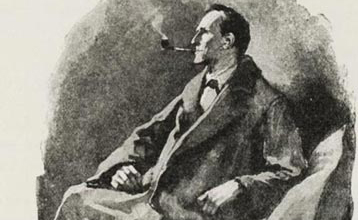
‘You see, but you do not observe. The distinction is clear.’
-A Scandal in Bohemia
This is going to be my self-reflection as a Game Master and a small lesson for those who want to run an investigate RPG.
First, my current Dungeons & Dragons campaign is at the end of season 3 and is transit to season 4 right now. For three months of the season 3 campaign, I learn one thing, and it drops my game down into the spiral of confusion and wonkiness. And that thing is “Your Players are not The Sherlock Holmes.”
My season 3 of the campaign starts off with a group of players finding a highly advanced empire ruled by the absolute monarchy system. The thing is, I planning this season to be a political campaign (The first two seasons are already exploring wilderness and dungeon crawling.) But I fail horribly wrong in doing that; why? My clue is too subtle.
Usually, when I run a game, I will plan everything that my villain or NPC will do, what will happen if player character does not intervene with the said plan. And when the game truly begins, I’ll move my NPC with an appropriate reaction according to, “What happens with their plan.”
And when I wrote this campaign first thing that came to my mind was, “The political game in this empire should be a quiet game of influent they secretly playing with each other between the noble, the rich house, and the royal family.” Sound good right? It should be a good change of pace, but there comes the execution of a grand scheme, and everything falls apart. But before I can tell you anything, you must know what the player characters are.
My players are playing a group of adventurers/settlers who journey west into the unknown continents for a chance of fortune and glory that awaits them in the new world. So, in the eyes of most of NPC in the empire, they are just a group of “Uncivilised murder hobo looking for a large amount of gold //with two or three smart one.” And what will those NPC do with them? Give them a quest and make them chase after the money and gold like a good little puppy chasing down a frisbee.
And how can this go wrong? It just sounds like a regular evil guy with a scheme. I can tell you there are many things that go wrong with this, and it is all my fault as a Game Master.
- My NPC plan is too good – it can’t make players feel suspicious about anything. They help the rebel NPC send the rebel group to a fake worker camp, help them gather the core energy of clockwork solder for a rebel leader to re-design it and put on a new order and take over the empire overnight! And not a thing in those quests piques any interest from my players to them. It’s just a go there, kill that, collect this kind of quest.
- I give them too few clues – and it’s a player clue, not a character clue. I give them many hints during a session and outside (Like in Facebook group). Mostly it’s a keyword in NPC dialogue spreading across the game. It seems so good and easy if my players put together the thing that NPC spoke to them and the stuff that happens around them together. But I forget one big thing “They are not The Sherlock Holmes.”
To sum it all, I just do not give them anything and hope they will find everything by themselves with no help.
Like Sherlock Holmes said. ‘You see, but you do not observe.’ And trust me when I say, “nobody is going to observe anything in a 5-hour-long session with a lot of terrible puns and cracking jokes.”
What did I learn from this?
- When you create an intelligent character, the character is the smart one, not the player (no offence.)
- Don’t expect the player to be a genius or smart enough to figure out the clue by themselves. Always expect the worse outcome.
- The player needs a clue to start the game – not – need the game to start finding a clue.
So what should I do? I should give my player a clue put it in their face, let them roll the dice to figure out a clue or just tell them about a clue, at least on the tip of the iceberg and after that, let them dig deeper by themselves.
And don’t challenge the player without them knowing. It can make some of them frustrated. If some part of the game you are going to use player skill instead of a character skill, tell them first. Be on the same page with them. Don’t let your player wander in the dark.
Nobody is going to put one word from NPC two weeks ago and tie it together with another word from NPC this week and the quest next week to form a conclusion of what happened behind their back. So, be there for them in the first step.
 Artikhun Story